How to Write a Short Film Script: A Step-by-Step Guide for Beginners
Want to write your first short film? Learn how to create a powerful short film script step by step — from idea to final draft, even if you’re a total beginner.
1/7/20262 min read
Every great film starts with a script — and every great script starts with an idea.
If you’ve ever wanted to tell your story on screen but didn’t know where to begin, writing a short film script is the perfect place to start. It’s manageable, creative, and teaches you everything about storytelling — structure, characters, and emotion — in a short amount of time.
In this guide, you’ll learn how to write a short film step by step, with practical tips from professional screenwriters and examples you can apply to your own projects.
Grab your notebook (or open your favorite writing software) — let’s get started.
Start with a Simple, Powerful Idea
The best short films often come from one strong idea, not a complicated plot.
Ask yourself:
What if…? (example: What if a man could talk to his future self?)
Who is my main character and what do they want?
What challenge or change happens in a few minutes of screen time?
Tip: Focus on one theme or emotion — love, loss, fear, joy, discovery.
Exercise: Write down three short film ideas that could be filmed in one location, with one or two actors.
Build a Clear Structure
Even short films need structure. The classic three-act format works perfectly, even for 5-minute stories:
Act 1 (Setup): Introduce your character and situation.
Act 2 (Conflict): Something goes wrong or the character faces an obstacle.
Act 3 (Resolution): The character changes or the situation resolves.
Example:
In The Black Hole, a man discovers a magical hole that lets him steal — until greed destroys him.
Three acts, one setting, one lesson.
Create Memorable Characters
Strong characters make short stories unforgettable.
Think about:
Goal: What do they want?
Obstacle: What stops them from getting it?
Change: What do they learn or lose by the end?
Pro tip: In short films, focus on one main character. Let the audience feel something for them quickly.
Example: In The Silent Child, we connect with the main character’s emotion almost instantly — that’s good writing.
Write Visual, Not Verbal, Stories
Film is a visual medium. Don’t rely too much on dialogue — show through actions and images.
Bad example:
“I feel sad,” she said.
Good example:
She stares at the birthday cake, untouched, candles still burning down.
Tip: Think like a director. Every line you write should be something the audience can see or hear.
Format Your Script Professionally
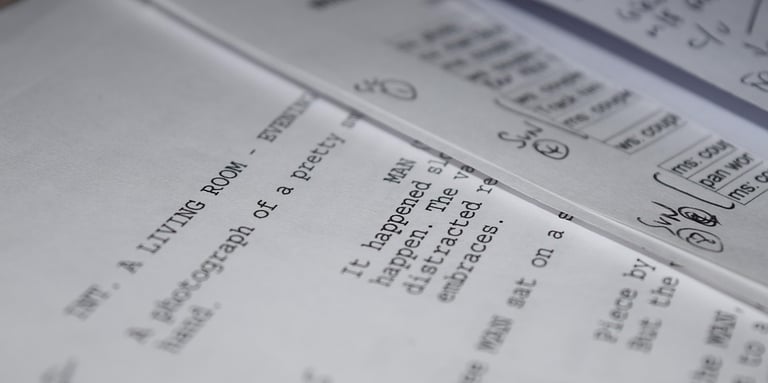
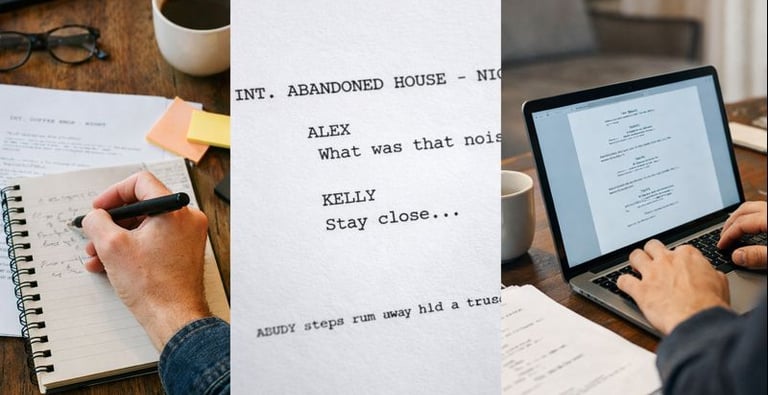
Use proper screenwriting software — it automatically formats your script to industry standards.
Recommended tools:
Celtx (Free)
WriterDuet
Arc Studio
Final Draft (paid, professional standard)
Basic formatting rules:
Use 12pt Courier font.
Center character names.
Keep one page = one minute of screen time.
Keep your short script under 10 pages for a 10-minute film.
Revise and Get Feedback
Your first draft is never your final draft — and that’s okay.
What to check before calling it finished:
Is every scene essential?
Is the pacing smooth?
Does the ending deliver emotion or surprise?
Pro tip: Share your script with friends, filmmaking classmates, or online communities. Feedback helps you see your blind spots.
Prepare for Production
Once your script feels solid, it’s time to think about making it real:
Choose a doable location.
Keep the cast small.
Check your script’s practicality (budget, props, time).
Call to Action:
Don’t just watch films — start making them.
Enroll in our International Filmmaking Course and turn your creative vision into reality.
👉 Internal link suggestion:
“If you want to go deeper, check out our Course