FILM OF THE WEEK
Every week, at Take One Academy, we go beyond a single scene to dive deep into an entire film — our Film of the Week.
Through guided analysis, we’ll uncover how the director’s choices shape the story’s rhythm, emotion, and meaning — from script to screen.
Each film becomes a laboratory of cinematic language:
How a camera movement can reveal psychology,
How light defines tone,
How sound, color, and editing work together to build a world that feels alive.
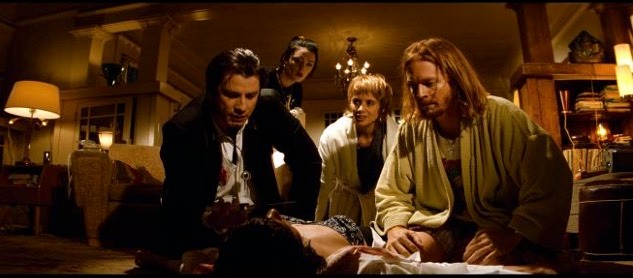
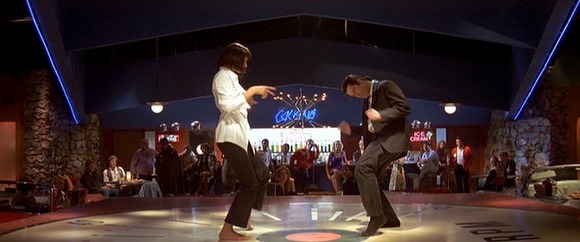
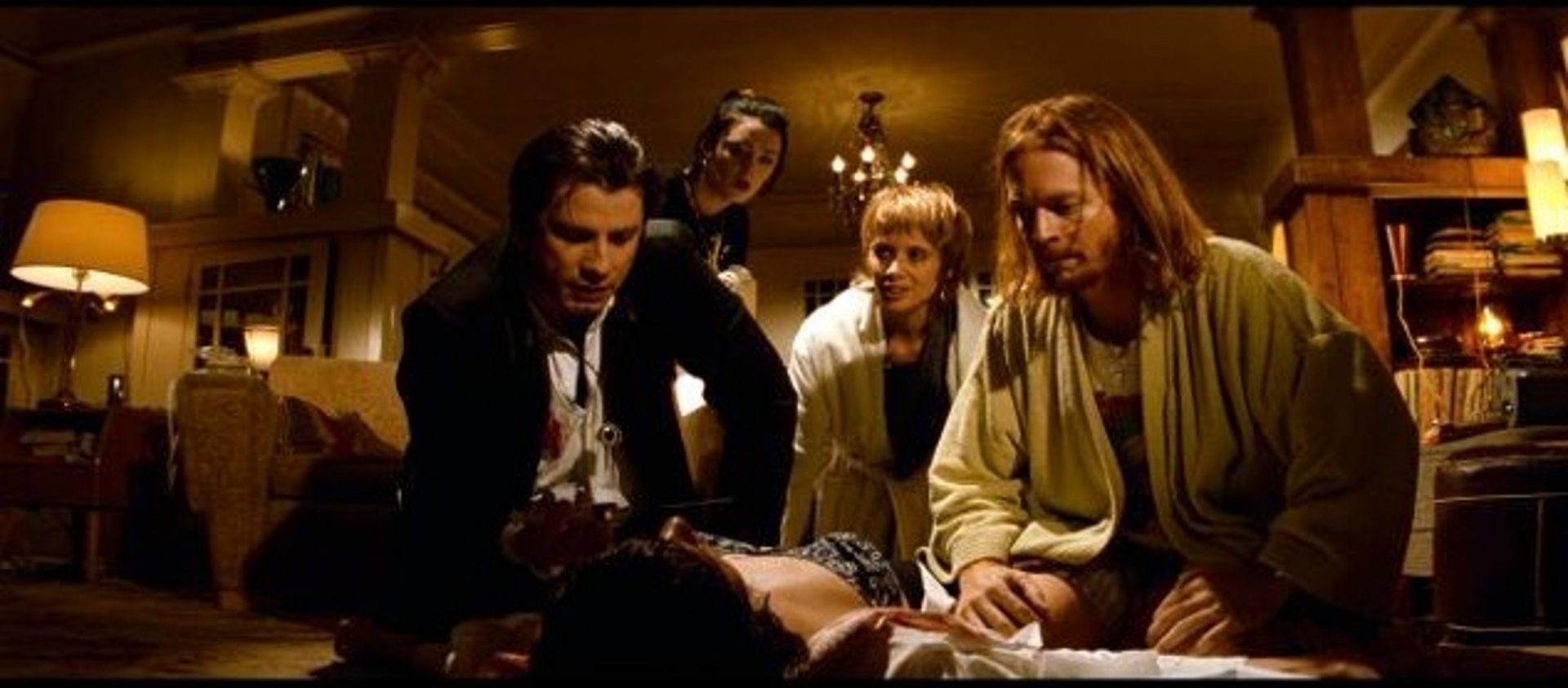
Why Watch Pulp Fiction as a Filmmaker?
1. Non-Linear Narrative: Breaking Rules with Purpose
Tarantino revolutionizes narrative structure with a fragmented, non-chronological story. This device is far from arbitrary—it demands active viewer engagement and allows events to be reinterpreted from new angles.
2. Dialogue: Authorial Voice and Characterization
One of the most studied aspects of Tarantino’s work: the dialogue. Long, seemingly trivial conversations loaded with rhythm, intention, and character. They entertain while building deep characterization.
3. Editing: The Editor as Narrator
Sally Menke’s editing is fundamental. The pacing, sequencing, and breathing room given to each story showcase the editor’s role as a key narrative architect.
4. Visual Style: Impactful Aesthetic Minimalism
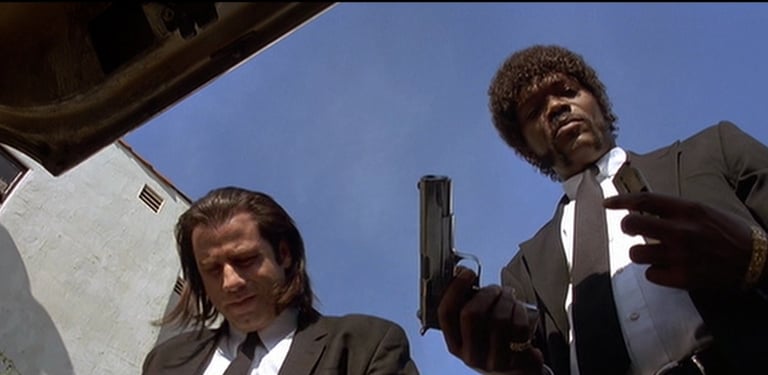
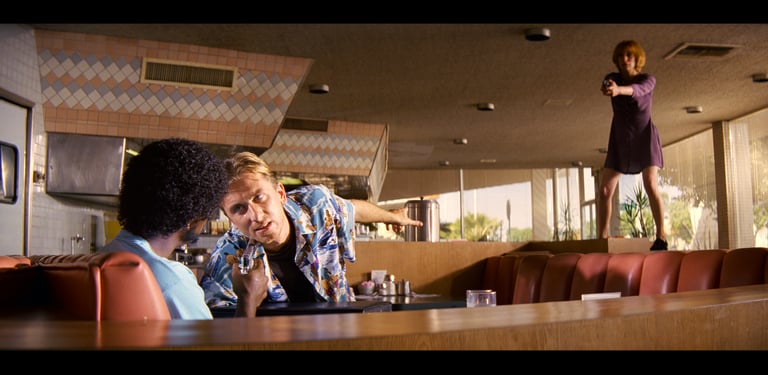
Andrzej Sekuła opts for functional, no-frills cinematography that highlights narrative over visual spectacle. Framing, composition, and lighting are used to let characters shine.
5. Music: Emotional Curation
Tarantino crafts a non-original soundtrack that’s deeply narrative. Each song feels like a character in itself, imbuing tone, irony, or momentum to its scene.
In every session, you’ll learn to recognize the invisible architecture behind great cinema — the structure, style, and emotion that make a story unforgettable.
We’ll discuss narrative design, visual composition, and character construction, while drawing connections between genres, auteurs, and eras.
Whether it’s a contemporary masterpiece or a timeless classic, each week’s film is an invitation to watch with new eyes — to see not just what happens, but how and why it happens.
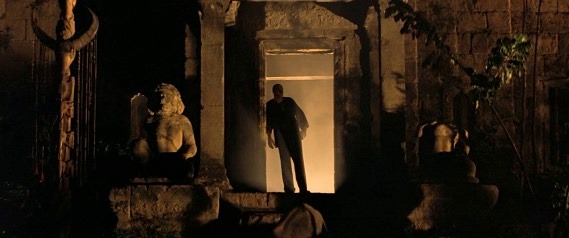
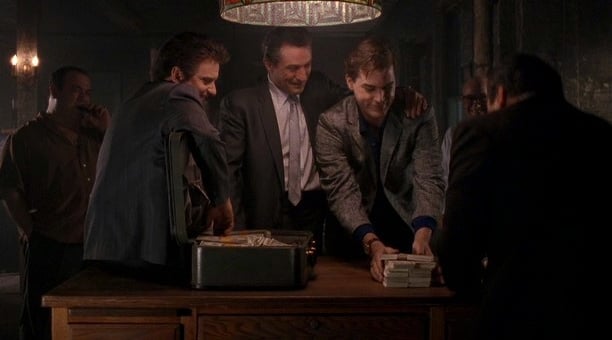
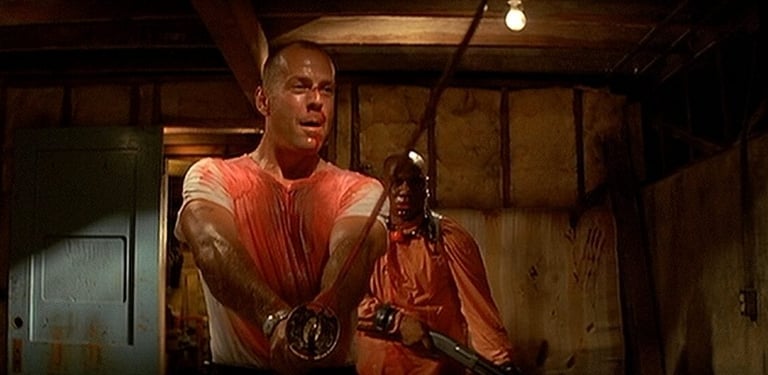
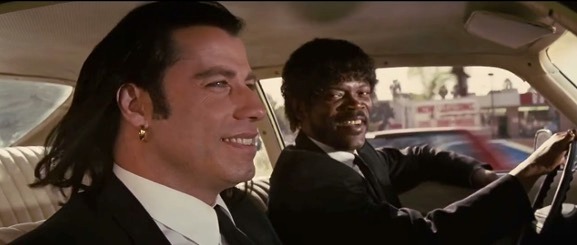
Let's look at a small example of what we will be analyzing week by week.